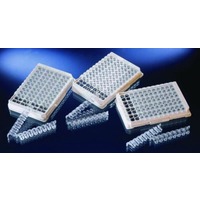



Deep-well Platten
Deep Well Platten, PP und PS

Die LABSOLUTE® Deep Well Platten erfüllen alle wichtigen Anforderungen für verschiedenste Anwendungsmöglichkeiten in der Zellkultur, Pharmazie und Molekularbiologie. Neben der Langzeitlagerung von Proben sind die Deep Well Platten für eine Vielzahl weiterer Applikationen einsetzbar wie z.B. die Kultivierung von Mikroorganismen, Screening-Untersuchungen sowie die Extraktion von Nukleinsäuren und Proteinen....
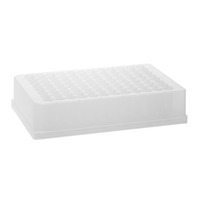
LLG-Deep-well-Platten, 384-well, PP

- Für die Probenlagerung
- Rechteckige Kavitäten
- V-Boden für optimale Probengewinnung
- Erhöhter Rand für optimalen Verschluss und Reduzierung von Kreuzkontamination
- Erhöhter Rand an den Ecken zum Schutz der Verschlusskanten
- Chemikalienbeständigkeit (z.B.: gegen DMSO, Phenol, Chloroform)
- Autoklavierbar (121 °C)
- Hochwertiges Polypropylen
- RNase, DNase- und Endotoxin-frei
- Reinraum-Produktion nach ISO
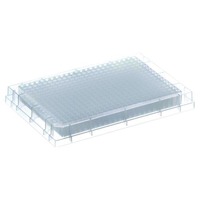
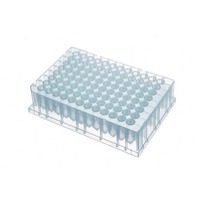
LLG-Aufbewahrungsplatten 96-well 0,8 ml, V-Boden, PP DNA/RNA frei, VE=50
LLG
-
1
| Bestell Nr. | Package size | Price per package | |||
|---|---|---|---|---|---|
|
9407508 This product of our assortment corresponds with your search. |
50 Stück | Login / Register here |

|
Deep well-Platten

Für eine Vielzahl von Anwendungen entwickelt, z.B. High-Throughput Screening (HTS), allgemeine Untersuchungen, die eine Stammplatte benötigen, Zell- und Gewebekultur, Probenaufbewahrung etc. Deep well-Platten sind mit allen führenden Pipettierrobotern und automatisierten Liquid-Handling-Systemen einsetzbar....
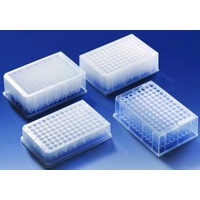
96 Well MASTERBLOCK® 2 ml und 0,5 ml

Die 0,5 ml und 2 ml MASTERBLOCK® sind ideale Microplatten zur Lagerung von nicht-humanem Probenmaterial, eignet sich aber auch hervorragend zur Anzucht von Bakterien oder Hefen. Biologisch inertes Verhalten gegen Biomoleküle, Beständigkeit gegen eine Vielzahl von im Labor üblichen Lösungsmitteln, wie DMSO, und eine Temperaturbeständigkeit von -196 °C bis +121 °C sind wesentliche Eigenschaften....
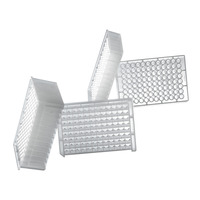
384 Well Polypropylen Microplatten - fester Boden

Die 384 Well Microplatten werden unter DIN ISO 9001 Bedingungen hergestellt und können durch ein definiertes Lot-Nummern-System lückenlos rückverfolgt werden. Zudem sind sie für automatisierte Systeme geeignet. Polypropylen (PP) bindet kaum Biomoleküle, hat eine hohe Temperaturtoleranz und ist gegen viele gebräuchliche Laborchemikalien, wie DMSO, beständig. Von schwarzen Polypropylen Microplatten für die Fluoreszenzpolarisation, bis hin zu weißen Microplatten für Scintillation Proximity Assays (SPA) ist alles im 384 Well Polypropylen Programm erhältlich. Die verbesserte „Rounded Square Well” Näpfchengeometrie sorgt für ein flexibles Arbeitsvolumen von 15 bis 110 μl, mit den Vorteilen eines runden Näpfchens, wie vermindertes Kriechen und verminderte Meniskusbildung....
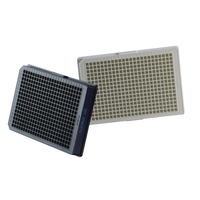
384 Well Polystyrol Microplatten - μClear®

Die 384 Well Microplatten werden unter DIN ISO 9001 Bedingungen hergestellt und können durch ein definiertes Lot-Nummern-System lückenlos rückverfolgt werden. Zudem sind sie für automatisierte Systeme geeignet. Polystyrol ist ein hoch transparenter Kunststoff, der hervorragende optische Eigenschaften besitzt und somit sehr gut für präzise optische Messungen geeignet ist. Ebenso eignet es sich für das Arbeiten mit Zellkulturen. Die verbesserte „Rounded Square Well” Näpfchengeometrie sorgt für ein flexibles Arbeitsvolumen von 15 bis 110 μl, mit den Vorteilen eines runden Näpfchens, wie vermindertes Kriechen und verminderte Meniskusbildung....
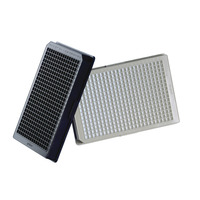
96 Well Half Area Microplatten

Die 96 Well Polystyrol Microplatten werden unter DIN ISO 9001 Bedingungen hergestellt und können durch ein definiertes Lot-Nummern-System lückenlos rückverfolgt werden. Zudem sind sie für automatisierte Systeme geeignet. Polystyrol ist ein hoch transparenter Kunststoff, der hervorragende optische Eigenschaften besitzt und somit sehr gut für präzise optische Messungen geeignet ist. Ebenso eignet es sich für das Arbeiten mit Zellkulturen....
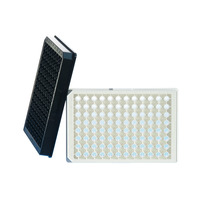
96 Well MASTERBLOCK® 1 ml

Der 1 ml MASTERBLOCK® ist die ideale Microplatte für die Lagerung von nicht-humanem Probenmaterial, eignet sich aber auch hervorragend zur Anzucht von Bakterien oder Hefen. Biologisch inertes Verhalten gegen Biomoleküle, Beständigkeit gegen eine Vielzahl von im Labor üblichen Lösungsmitteln, wie DMSO, und eine Temperaturbeständigkeit von -196 °C bis +121 °C sind wesentliche Eigenschaften....
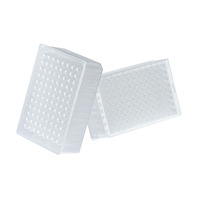
96 Well Polypropylen Microplatten - U-Boden

Die 96 Well Microplatten werden unter DIN ISO 9001 Bedingungen hergestellt und können durch ein definiertes Lot-Nummern-System lückenlos rückverfolgt werden. Zudem sind sie für automatisierte Systeme geeignet. Polypropylen (PP) bindet kaum Biomoleküle, hat eine hohe Temperaturtoleranz und ist gegen viele gebräuchliche Laborchemikalien, wie DMSO, beständig. Von schwarzen Polypropylen Microplatten für die Fluoreszenzpolarisation, bis hin zu weißen Microplatten für Scintillation Proximity Assays (SPA) ist alles im 96 Well Polypropylen Programm erhältlich....

96-Well Mikrotiterplatte Nunc™ Edge 2.0, PS, mit hydrophiler Oberfläche Nunclon™ D

Minimierte Verdunstung durch das des einzigartige Design der Thermo Scientific™ Nunc™ Edge-96 Well Platten. Die Edge Platten zeichnen sich durch ihre herausragenden optischen Eigenschaften aus, die eine effiziente Nutzung von automatisierten Bildgebungssystemen ermöglichen. Die Platten bestehen aus transparentem Polystyrol und besitzen ausgezeichnete optische Eigenschaften....
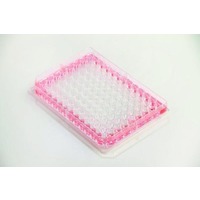
Deep-well-Platten, 96/48-well, PP

Deep-well-Platten von Ratiolab sind erhältlich als Low Profile oder Standard Variante mit verschiedenen Volumina von 1,2 bis 4,6 ml pro Well.
- Erhältlich mit U-Boden (Low Profile + Standard) und V-Boden
- SBS-Standard Mikrotestplattenformat
- Kaminförmige Kavitäten mit deutlich größerem Querschnitt, verhindert Cross-Kontamination
- Verbesserte Sichtkontrolle durch klares Polypropylen
- 1,2 ml Low Profile Deep-well-Platten sind ca. halb so hoch wie herkömmliche Deep-well-Platten
- 30 % geringerer Platzbedarf bei Verwendung der Low Profile Platten
- Autoklavierbar bei 121 °C, 20 min
- Temperaturbeständig bis -80 °C
- 8 x 12 Wells mit alphanummerischem Code im Mikrotestplattenformat
- Hochpräzise Form, ideal für die Verarbeitung mit Pipettierautomaten beim High Throughput Screening (HTS)
- Seitenflächen für die Beschriftung mit Barcode-Etiketten geeignet
- Platzsparend stapelbar
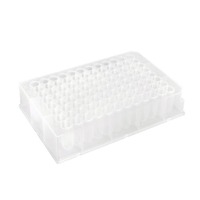
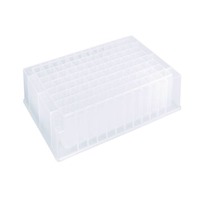
Deep-well-Platten, 96/384-well, PP, PCR clean

Hochleistungsplatten für manuelle oder automatisierte Anwendungen. Geeignet für Probenlagerung und -vorbereitung, Bakterien- und Hefekultivierung, DNA- und RNA-Isolierung, Proteinanalyse und Plasmidaufreinigung.
- Klare Wells
- Rand weiß oder farbig
- Kontrastreiche, alphanumerische Beschriftung
- Autoklavierbar (121 °C, 20 min)
- Zentrifugationsbeständigkeit bis 6000 × g
- Abgerundetes RecoverMax®-Well-Design
- Erhöhte Well-Rahmen für zuverlässiges Verschließen, auch beim Heat Sealing
- Gut stapelbar
- PCR clean: frei von menschlicher DNA, DNase, RNase und PCR-Inhibitoren
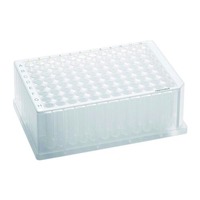
Deep-well-Platten, 96/384-well, PP, steril
Hochleistungsplatten für manuelle oder automatisierte Anwendungen. Geeignet für Probenlagerung und -vorbereitung, Bakterien- und Hefekultivierung, DNA- und RNA-Isolierung, Proteinanalyse und Plasmidaufreinigung.
- Klare Wells
- Rand weiß oder farbig
- Kontrastreiche, alphanumerische Beschriftung
- Autoklavierbar (121 °C, 20 min)
- Zentrifugationsbeständigkeit bis 6000 × g
- Abgerundetes RecoverMax®-Well-Design
- Erhöhte Well-Rahmen für zuverlässiges Verschließen, auch beim Heat Sealing
- Gut stapelbar
Deepwell-Plattensystem Riplate® round wells
Screening, Probelagerung u.a. Ritter Riplate
® Systeme entsprechen dem SBS-Standard und sind geeignet für alle Automatisierungssysteme mit passendem Verschluss-/ Versiegelungsmechanismus.
Erhöhte Wells verringern das Risiko der Kreuzkontamination und verbessern die Sicherheit beim Verschweißen oder Verschließen mit Klebefolie. Für Anwendungen im Thermocycler oder zum Auftauen gefrorener Proben im Wasserbad. Der runde Boden garantiert eine hohe Probenrückgewinnung....
Deepwell-Plattensystem Riplate® square wells
Screening, Probelagerung u.a. Ritter Riplate
® Systeme entsprechen dem SBS-Standard und sind geeignet für alle Automatisierungssysteme mit passendem Verschluss-/ Versiegelungsmechanismus.
Die Riplate SW dienen vor allem der optimalen Raumausnutzung zur Lagerung. Durch das SBS-Format der Riplate sind die Außenmaße vorgegeben. Die zweckmäßige Formgebung des Innenraumes trägt somit entscheidend zum maximalen Aufnahmevolumen der Platte bei....
Deepwell-Plattensystem Riplate® medio

Screening, Probelagerung u.a. Ritter Riplate
® Systeme entsprechen dem SBS-Standard und sind geeignet für alle Automatisierungssysteme mit passendem Verschluss-/ Versiegelungsmechanismus.
Durch kompakte Bauweise bietet Riplate medio bis zu 50 % geringere Stapelhöhe. Die erhöhten Ränder der einzelnen Wells lassen die Riplate medio luftdicht verschweißen oder verkleben. Die alphanumerische Kennzeichnung ermöglicht die Registrierung und Identifizierung der einzelnen Proben....
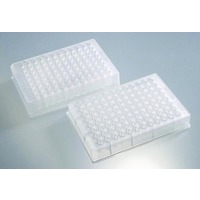
Ethyl Vinyl Acetat CapMats

96 Well CapMats mit runden Noppen sind zum Verschließen von 1 und 0,5 ml 96 Well MASTERBLOCK® sowie allen 96 Well Polypropylen Microplatten geeignet. 96 Well Polystyrol Microplatten mit F-, U- oder μClear®-Boden können ebenfalls verschlossen werden, nicht jedoch 96 Well Polystyrol Microplatten mit V-Boden. Die CapMats sind nicht durchstechbar. 96 Well CapMats mit quadratischen Noppen sind zum Verschließen von 2 ml 96 Well MASTERBLOCK® geeignet. Die CapMats sind nicht durchstechbar....
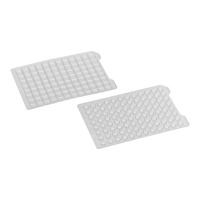
96 Well Immuno Platten, PS, flacher Boden

Nicht sterile Immuno Platten mit durchsichtigem flachem Boden, besonders geeignet für quantitative und qualitative Festphasen-Immunoassays.
Auswahl an verschiedenen Oberflächen:
PolySorp™, Immulon™ 1B und Universal Binding (UB) dienen zur Adsorption wasserabweisender Moleküle.
Medisorp™ und Immulon 2HB sind leicht hydrophil und binden eine breite Palette an Biomolekülen....
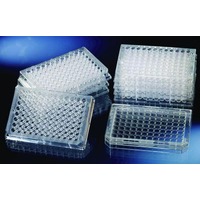
96/384 Well Platten und Module CovaLink™ und Immobilizer Streptavidin, PS

Mikrotiterplatten für Immunoassays mit Oberflächen für Affinitätsbindungen (passives Streptavidin und Immobilizer Streptavidin, Nickel-Chelat und Glutathion, BioBind).
- Streptavidin-Biotin-Wechselwirkung für eine Vielzahl von Biomolekülen
- Hochgradig spezifische Bindungsoberfläche
- Verbesserung des Signal-Rausch-Verhältnisses
- 96 Well-Platte: Arbeitsvolumen 100 µl/Well, Gesamtvolumen 350-400 µl/Well
- 384 Well-Platte: Arbeitsvolumen 50 µl/Well, Gesamtvolumen 120 µl/Well
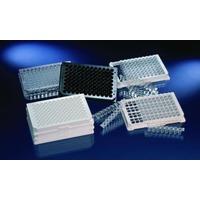
96 Well Immuno™ Module

Entwickelt für quantitative und qualitative Festphasen-Immunoassays, z.B. ELISA-Techniken.
- Alphanumerisches Orientierungssystem
- Standardformat 128 x 86 mm
- Ausgezeichnete optische Qualität
- Vier Bodentypen: flach (F), rund (U), flach mit gerundeten Ecken (C) oder StarWell™
- Rahmen und Module einzeln erhältlich
- Module bleiben beim Ausklopfen im Rahmen
- Zertifikat für Bindungshomogenität
- Freistehende Module
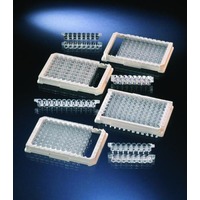
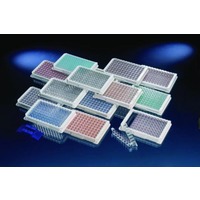
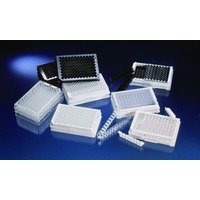
Kollagen Typ I CELLCOAT® Zellkultur Multiwell Platten - Zellkultur Microplatten
CELLCOAT® umfasst Zellkultur Gefäße, die mit Proteinen der extrazellulären Matrix oder synthetischen Proteinen beschichtet sind. Sie bewirken eine verbesserte Adhäsion und Proliferation von Primärzellen und schwer zu kultivierenden Zelllinien. Es ermöglichet ein Serum-freies bzw. Serum-reduziertes Kultivieren von Zellen. Das Ergebnis von Experimenten, bei denen sich die Zellen vom Untergrund ablösen können (Transfektion, Waschschritte), wird verbessert. Die Differenzierung einzelner Zelltypen kann durch die Proteinbeschichtung gefördert werden....
Module für Immunologie, C8 LockWell, PS, abbrechbar

Transparente Module in standardmäßigen 96-Well-Rahmen.
- Standardformat 128 x 86 mm
- Hohe optische Qualität für zuverlässige Ergebnisse
- Freistehende Module mit einfacher Handhabung
- Alphanumerisches System zur besseren Orientierung
Auswahl an verschiedenen Oberflächen:...