Filter products
Salts
POTASSIUM THIOCYANATE, ACS
CLP-Info
- H302: Harmful if swallowed.
- H312: Harmful in contact with skin.
- H332: Harmful if inhaled.
POTASSIUM THIOCYANATE, ACS GRADE
CLP-Info
- H302: Harmful if swallowed.
- H312: Harmful in contact with skin.
- H332: Harmful if inhaled.
- H412: Harmful to aquatic life with long lasting effects.
- EUH032: Contact with acids liberates very toxic gas.
- P261: Avoid breathing dust/fume/gas/mist/vapours/spray.
- P273: Avoid release to the environment.
- P304+P340: IF INHALED: Remove person to fresh air and keep comfortable for breathing.
Potassium thiocyanate, ACS, 98.5% min
CLP-Info
- H302+H312+H332: Harmful if swallowed, in contact with skin or if inhaled
- H412: Harmful to aquatic life with long lasting effects.
- EUH032: Contact with acids liberates very toxic gas.
Potassium thiocyanate, min. 98.5 %, p.a., ACS
CLP-Info
- H302: Harmful if swallowed.
- H312: Harmful in contact with skin.
- H332: Harmful if inhaled.
- H412: Harmful to aquatic life with long lasting effects.
- P273: Avoid release to the environment.
- P280: Wear protective gloves/protective clothing/eye protection/face protection.
Potassium thiocyanate, puriss. p.a., ACS Reagent, Reag. ISO, Reag. Ph. Eur., ≥99%
CLP-Info
- H315: Causes skin irritation.
- H319: Causes serious eye irritation.
POTASSIUM THIOSULFATE, >=95%
CLP-Info
- H302: Harmful if swallowed.
- H315: Causes skin irritation.
- H319: Causes serious eye irritation.
- H335: May cause respiratory irritation.
- P261: Avoid breathing dust/fume/gas/mist/vapours/spray.
- P305+P351+P338: IF IN EYES: Rinse cautiously with water for several minutes. Remove contact lenses, if present and easy to do. Continue rinsing.
Potassium triphosphate /96+%
Potassium triphosphate, 94%
POTASSIUMDIHYDROGENPHOSPHATE
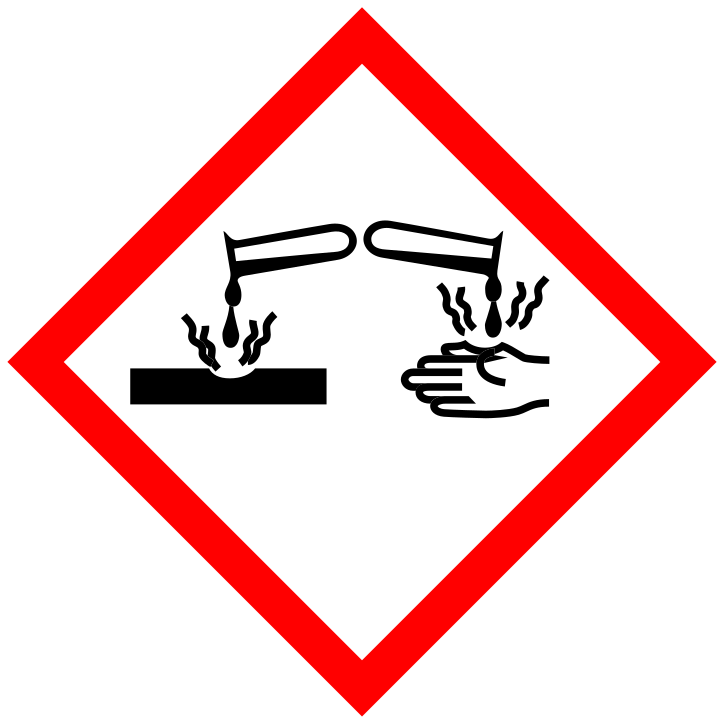
CLP-Info
- H318: Causes serious eye damage.
- H335: May cause respiratory irritation.
- P280: Wear protective gloves/protective clothing/eye protection/face protection.
- P305+P351+P338: IF IN EYES: Rinse cautiously with water for several minutes. Remove contact lenses, if present and easy to do. Continue rinsing.
- P313: Get medical advice/attention.
POTASSIUMDISULFITE PURE
CLP-Info
- H315: Causes skin irritation.
- H412: Harmful to aquatic life with long lasting effects.
- P273: Avoid release to the environment.
- P501: Dispose of contents/container to
Potassiumhexacyanoferrate(II) trihydrate
POTASSIUMHYDROGENPHOSPHATE ANH
POTASSIUMNITRATE P.A. 99+%
CLP-Info
- H315: Causes skin irritation.
- H319: Causes serious eye irritation.
- H335: May cause respiratory irritation.
- P261: Avoid breathing dust/fume/gas/mist/vapours/spray.
- P305+P351+P338: IF IN EYES: Rinse cautiously with water for several minutes. Remove contact lenses, if present and easy to do. Continue rinsing.
PRASEODYM-SULFAT-OCTAHYDRAT
CLP-Info
- H290: May be corrosive to metals.
- H314: Causes severe skin burns and eye damage.
Primary Interferents Interferents A for ICP, Certified Reference Material, 5000 mg/L each of Al, Ca, Mg, 2000 mg/L Fe in HNO₃ 5%
CLP-Info
- H315: Causes skin irritation.
- H317: May cause an allergic skin reaction.
- H319: Causes serious eye irritation.
- P280: Wear protective gloves/protective clothing/eye protection/face protection.
- P338: Remove contact lenses, if present and easy to do. Continue rinsing.
Prohexadione calcium
CLP-Info
- H319: Causes serious eye irritation.
- H332: Harmful if inhaled.
- P261: Avoid breathing dust/fume/gas/mist/vapours/spray.
- P264: Wash thoroughly after handling.
- P271: Use only outdoors or in a well-ventilated area.
- P280: Wear protective gloves/protective clothing/eye protection/face protection.
- P304+P340: IF INHALED: Remove person to fresh air and keep comfortable for breathing.
- P305+P351+P338: IF IN EYES: Rinse cautiously with water for several minutes. Remove contact lenses, if present and easy to do. Continue rinsing.
- P312: Call a POISON CENTRE/doctor/ if you feel unwell.
- P337+P313: If eye irritation persists: Get medical advice/attention.
Prohexadione calcium, neat, produced according to ISO 17025