Filter products
GC reagents
CLP-Info
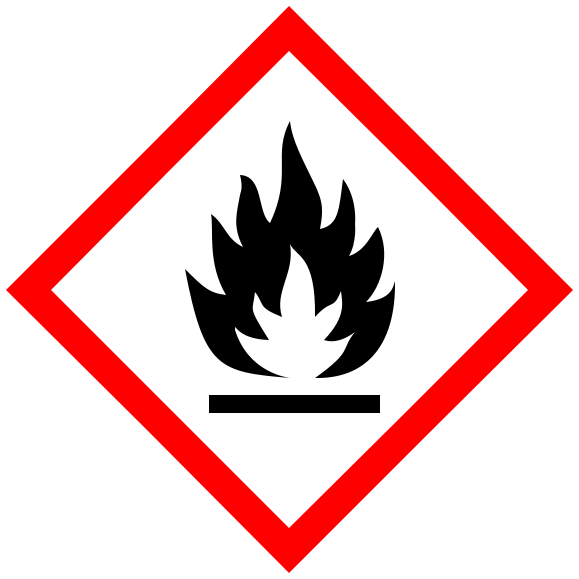
- H226: Flammable liquid and vapour.
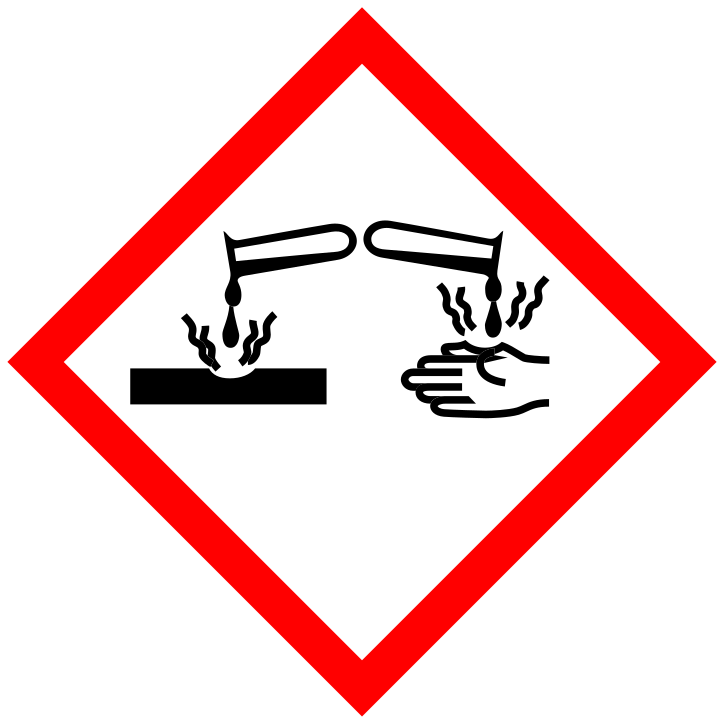
- H314: Causes severe skin burns and eye damage.
- P210: Keep away from heat, hot surfaces, sparks, open flames and other ignition sources. No smoking.
- P280: Wear protective gloves/protective clothing/eye protection/face protection.
- P303+P361+P353: IF ON SKIN (or hair): Take off immediately all contaminated clothing. Rinse skin with water [or shower].
- P305+P351+P338: IF IN EYES: Rinse cautiously with water for several minutes. Remove contact lenses, if present and easy to do. Continue rinsing.
- P308+P311: IF exposed or concerned: Call a POISON CENTER/doctor/
N,O-Bis(trimethylsilyl)trifluoroacetamide (BSTFA) p. a. (min. 98.0 %)
CLP-Info
- H225: Highly flammable liquid and vapour.
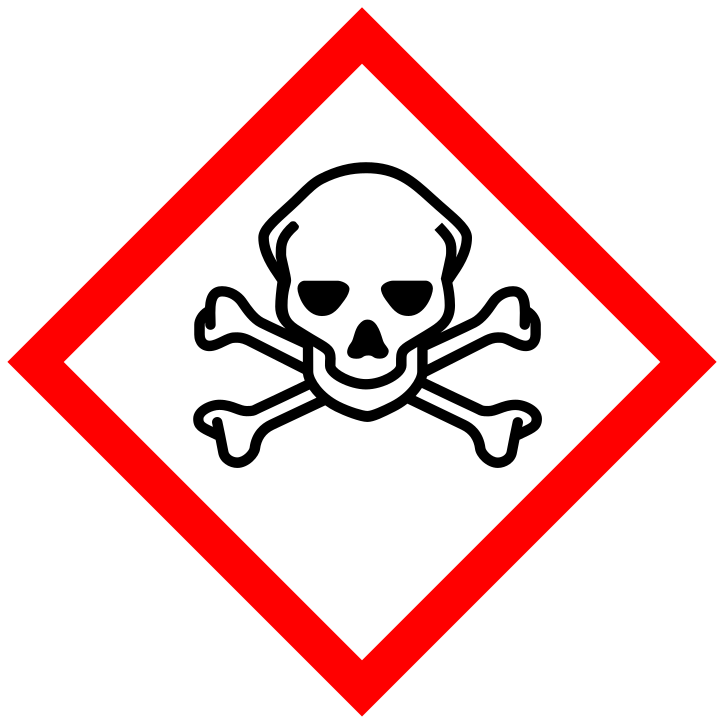
- H301: Toxic if swallowed.
- H311: Toxic in contact with skin.
- H331: Toxic if inhaled.
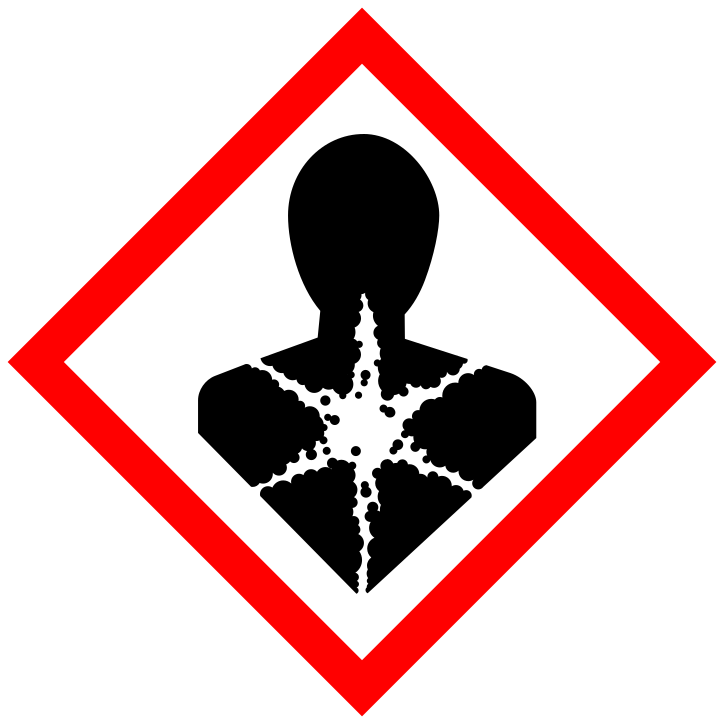
- H370: Causes damage to organs .
- P210: Keep away from heat, hot surfaces, sparks, open flames and other ignition sources. No smoking.
- P233: Keep container tightly closed.
- P301+P310: IF SWALLOWED: Immediately call a POISON CENTER/doctor/
- P302+P352: IF ON SKIN: Wash with plenty of water/
- P304+P340: IF INHALED: Remove person to fresh air and keep comfortable for breathing.
- P311: Call a POISON CENTER/doctor/
- P312: Call a POISON CENTRE/doctor/ if you feel unwell.
- P403+P233: Store in a well-ventilated place. Keep container tightly closed.
- P405: Store locked up.
TMSH (0.2 M in methanol) M.G. 94.06
CLP-Info
- H319: Causes serious eye irritation.
- H351: Suspected of causing cancer .
- P201: Obtain special instructions before use.
- P280: Wear protective gloves/protective clothing/eye protection/face protection.
- P305+P351+P338: IF IN EYES: Rinse cautiously with water for several minutes. Remove contact lenses, if present and easy to do. Continue rinsing.
- P308+P313: IF exposed or concerned: Get medical advice/attention.
- P337+P313: If eye irritation persists: Get medical advice/attention.
Powder reagents in individually sealed packages.
CLP-Info
- H226: Flammable liquid and vapour.
- H302: Harmful if swallowed.
- H314: Causes severe skin burns and eye damage.
- H315: Causes skin irritation.
- H319: Causes serious eye irritation.
- H332: Harmful if inhaled.
- H412: Harmful to aquatic life with long lasting effects.
- P264: Wash thoroughly after handling.
- P303+P361+P353: IF ON SKIN (or hair): Take off immediately all contaminated clothing. Rinse skin with water [or shower].
- P305+P351+P338: IF IN EYES: Rinse cautiously with water for several minutes. Remove contact lenses, if present and easy to do. Continue rinsing.
- P310: Immediately call a POISON CENTER/doctor/
- P405: Store locked up.
- P501: Dispose of contents/container to
For improved volatility, better thermal stability or low limit of detection in gas chromatography prerequisite: quantitative, rapid and reproducible formation of only on derivative halogen atoms introduced by derivatisation (e.g. trifluoroacetates) allow specific detection (ECD) with the advantage of high sensitivity elution order and fragmentation patterns in MS can be influenced by a specific derivatisation.Which is the proper reagent for acylation?Test kit for determination of the optimum acylation.
CLP-Info
- H314: Causes severe skin burns and eye damage.
- P303+P361+P353: IF ON SKIN (or hair): Take off immediately all contaminated clothing. Rinse skin with water [or shower].
- P305+P351+P338: IF IN EYES: Rinse cautiously with water for several minutes. Remove contact lenses, if present and easy to do. Continue rinsing.
- P310: Immediately call a POISON CENTER/doctor/
Acylation with fluorinated acid anhydrides can be used for alcohols, phenols, carboxylic acids, amines, amino acids and steroids forming volatile, stable derivatives suited for FID as well as for ECD detection.by-products of acylation with anhydrides: corresponding acidsexcess reagent and the acid formed have to be removedHeptafluorobutyric acid anhydride (HFBA)m.w. 410.06, Bp 106 - 107°C (760mm Hg),C3F7 - CO - O - CO - C3F7density d20°/4° = 1.665
CLP-Info
- H226: Flammable liquid and vapour.
- H302: Harmful if swallowed.
- H315: Causes skin irritation.
- H319: Causes serious eye irritation.
- P303+P361+P353: IF ON SKIN (or hair): Take off immediately all contaminated clothing. Rinse skin with water [or shower].
- P305+P351+P338: IF IN EYES: Rinse cautiously with water for several minutes. Remove contact lenses, if present and easy to do. Continue rinsing.
- P501: Dispose of contents/container to
Acylation with fluorinated acid amides is recommended for alcohols, primary and secondary amines as well as for thiols under mild, neutral conditions. MBTFA also forms very volatile derivatives with carbohydrates.by-products: corresponding neutral acylamides, which can be easily removed due to their high volatility; because of neutral conditions and favourable chromatographic properties often removal of the bisacylamide is not necessary. Thus sample preparation is much more convenient.MBTFA / MBHFBAN-methyl-bis(trifluoroacetamide) MBTFAm.w. 223.08, Bp 123 - 124°C (760mm Hg), density d20°/4° = 1.55,CF3 - CO - N(CH3) - CO - CF3
CLP-Info
- H225: Highly flammable liquid and vapour.
- H301: Toxic if swallowed.
- H302: Harmful if swallowed.
- H311: Toxic in contact with skin.
- H315: Causes skin irritation.
- H319: Causes serious eye irritation.
- H331: Toxic if inhaled.
- H335: May cause respiratory irritation.
- H370: Causes damage to organs .
- P302+P352: IF ON SKIN: Wash with plenty of water/
- P311: Call a POISON CENTER/doctor/
- P405: Store locked up.
Which is the proper reagent for methylation?Test kit for determination of the optimum alkylation.
CLP-Info
- H225: Highly flammable liquid and vapour.
- H226: Flammable liquid and vapour.
- H301: Toxic if swallowed.
- H302: Harmful if swallowed.
- H311: Toxic in contact with skin.
- H315: Causes skin irritation.
- H319: Causes serious eye irritation.
- H331: Toxic if inhaled.
- H370: Causes damage to organs .
- P302+P352: IF ON SKIN: Wash with plenty of water/
- P303+P361+P353: IF ON SKIN (or hair): Take off immediately all contaminated clothing. Rinse skin with water [or shower].
- P305+P351+P338: IF IN EYES: Rinse cautiously with water for several minutes. Remove contact lenses, if present and easy to do. Continue rinsing.
- P311: Call a POISON CENTER/doctor/
- P405: Store locked up.
- P501: Dispose of contents/container to
For improved volatility, better thermal stability or low limit of detection in gas chromatography prerequisite: quantitative, rapid and reproducible formation of only on derivative halogen atoms introduced by derivatisation (e.g. trifluoroacetates) allow specific detection (ECD) with the advantage of high sensitivity elution order and fragmentation patterns in MS can be influenced by a specific derivatisation.Which type of derivatisation is best suited for your sample (alkylation, silylation or acylation)? Test kit for determination of the optimum derivatisation.
The ion chromatography standards are produced gravimetrically from high-purity material in a highly controlled clean room environment (ISO 7). The final product is tested and verified before bottling.
CLP-Info
- H225: Highly flammable liquid and vapour.
- H226: Flammable liquid and vapour.
- H302: Harmful if swallowed.
- H315: Causes skin irritation.
- H319: Causes serious eye irritation.
- H335: May cause respiratory irritation.
- H360: May damage fertility or the unborn child .
- P201: Obtain special instructions before use.
- P210: Keep away from heat, hot surfaces, sparks, open flames and other ignition sources. No smoking.
- P233: Keep container tightly closed.
- P301+P312: IF SWALLOWED: Call a POISON CENTRE/doctor/ if you feel unwell.
- P308+P313: IF exposed or concerned: Get medical advice/attention.
- P330: Rinse mouth.
- P403+P233: Store in a well-ventilated place. Keep container tightly closed.
- P405: Store locked up.
Which is the proper reagent for silylation?Test kit for determination of the optimum silylation.
CLP-Info
- H226: Flammable liquid and vapour.
- H315: Causes skin irritation.
- H319: Causes serious eye irritation.
- P210: Keep away from heat, hot surfaces, sparks, open flames and other ignition sources. No smoking.
N,O-bis-trimethylsilyl-trifluoroacetamidem.w. 257.4, Bp 40°C (12mm Hg), density d20°/4° = 0.961BSTFA: R = CF3 powerful trimethylsilyl donor with approximately the same donor strength as the non-fluorinated analogue BSAadvantage of BSTFA over BSA: greater volatility of its reaction products (particularly useful for GC of some lower boiling TMS amino acids.BSTFA is nonpolar (less polar than MSTFA), and can be mixed with acetonitrile for improved solubility. For silylating fatty acid amides, hindered hydroxyls and other compounds, which are difficult to silylate (like secondary alcohols and amines), we recommend BSTFA + 1% trimethylchlorosilane (TMCS), available under the designation SILYL-991.
CLP-Info
- H226: Flammable liquid and vapour.
- H302: Harmful if swallowed.
- H315: Causes skin irritation.
- H319: Causes serious eye irritation.
- P210: Keep away from heat, hot surfaces, sparks, open flames and other ignition sources. No smoking.
- P301+P312: IF SWALLOWED: Call a POISON CENTRE/doctor/ if you feel unwell.
- P330: Rinse mouth.
N-methyl-N-trimethylsilyl-trifluoroacetamidem.w. 199.1, Bp 70 °C (75 mm Hg), density d20°/4° = 1.11MSTFA: R' = CF3, R" = CH3The most volatile trimethylsilyl amide available.Very strong TMS donor which does not cause any noticeable fouling of the FID burning chamber even after long-time measuring series.The already good solution characteristics can be improved by addition of submolar quantities of protic solvents (e.g. TFA for extremely polar compounds such as hydrochlorides) or pyridine (e.g. for carbohydrates).
CLP-Info
- H314: Causes severe skin burns and eye damage.
- H332: Harmful if inhaled.
- H412: Harmful to aquatic life with long lasting effects.
- P264: Wash thoroughly after handling.
- P303+P361+P353: IF ON SKIN (or hair): Take off immediately all contaminated clothing. Rinse skin with water [or shower].
- P305+P351+P338: IF IN EYES: Rinse cautiously with water for several minutes. Remove contact lenses, if present and easy to do. Continue rinsing.
- P310: Immediately call a POISON CENTER/doctor/
- P405: Store locked up.
- P501: Dispose of contents/container to
Acylierungsmittel TFAA Packung à 1x10 ml Chemie-Testsatz 9 UN 3316 II 0,01 L|kg ADR/GGVSE M11,ADR 3.3.1/251: LQ 20=400ml
CLP-Info
- H226: Flammable liquid and vapour.
- H302: Harmful if swallowed.
- H315: Causes skin irritation.
- H319: Causes serious eye irritation.
- P210: Keep away from heat, hot surfaces, sparks, open flames and other ignition sources. No smoking.
- P301+P312: IF SWALLOWED: Call a POISON CENTRE/doctor/ if you feel unwell.
- P330: Rinse mouth.
Acylation reagent MBHFBA pack of 10x1 ml
CLP-Info
- H290: May be corrosive to metals.
- H314: Causes severe skin burns and eye damage.
- H335: May cause respiratory irritation.
- P303+P361+P353: IF ON SKIN (or hair): Take off immediately all contaminated clothing. Rinse skin with water [or shower].
- P305+P351+P338: IF IN EYES: Rinse cautiously with water for several minutes. Remove contact lenses, if present and easy to do. Continue rinsing.
- P310: Immediately call a POISON CENTER/doctor/
- P390: Absorb spillage to prevent material damage.
- P403+P233: Store in a well-ventilated place. Keep container tightly closed.
Acylation reagent PFBC pack of 10x1 ml UN 3316 Chemical Kit 9 II 0.01 kg|L ADR/GGVSE M11, ADR 3.3.1/251: LQ 22 = 10 kg PAX+CAO 915 EQ
CLP-Info
- H314: Causes severe skin burns and eye damage.
- H332: Harmful if inhaled.
- H412: Harmful to aquatic life with long lasting effects.
- P273: Avoid release to the environment.
- P303+P361+P353: IF ON SKIN (or hair): Take off immediately all contaminated clothing. Rinse skin with water [or shower].
- P305+P351+P338: IF IN EYES: Rinse cautiously with water for several minutes. Remove contact lenses, if present and easy to do. Continue rinsing.
- P310: Immediately call a POISON CENTER/doctor/
Acylation reagent TFAA UN 3316 Chemical Kit 9 II 0.05 kg|L ADR/GGVSE M11, ADR 3.3.1/251: LQ 22 = 10 kg PAX+CAO 915 EQ
BTX standard dissolved in methanol concentration 10 ng/µl pack of 1 ml UN 3316 Chemical Kit 9 II 0.001 kg|L ADR/GGVSE M11, LQ 0 PAX+CAO 915 EQ
Raw test mixture nr. 722310
Haloform test mixture in methanol (quant.)