










Filter products
Search results

Glycerol anhydrous p. a. (min. 99.5 %)

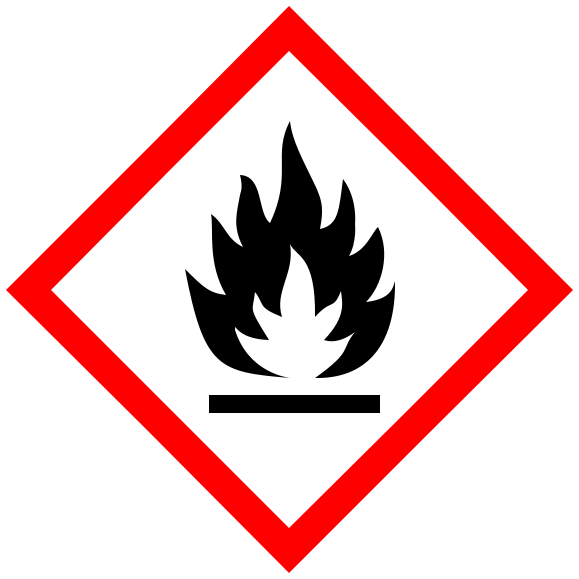
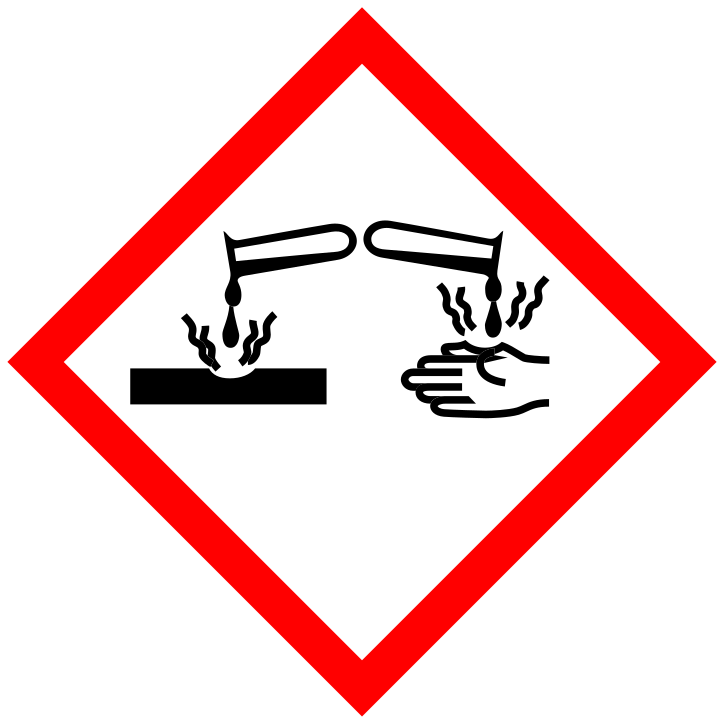
 Danger
CLP-Info
Danger
- H225: Highly flammable liquid and vapour.
- H302: Harmful if swallowed.
- H315: Causes skin irritation.
- H318: Causes serious eye damage.
- H335: May cause respiratory irritation.
- P210: Keep away from heat, hot surfaces, sparks, open flames and other ignition sources. No smoking.
- P280: Wear protective gloves/protective clothing/eye protection/face protection.
- P303+P361+P353: IF ON SKIN (or hair): Take off immediately all contaminated clothing. Rinse skin with water [or shower].
- P304+P340: IF INHALED: Remove person to fresh air and keep comfortable for breathing.
- P305+P351+P338: IF IN EYES: Rinse cautiously with water for several minutes. Remove contact lenses, if present and easy to do. Continue rinsing.
- P501: Dispose of contents/container to
2-Methyltetrahydrofuran for synthesis (min. 99.9 %, stabilised with BHT)
 Danger
CLP-Info
Danger
- H225: Highly flammable liquid and vapour.
- H302: Harmful if swallowed.
- H315: Causes skin irritation.
- H319: Causes serious eye irritation.
- P210: Keep away from heat, hot surfaces, sparks, open flames and other ignition sources. No smoking.
- P243: Take action to prevent static discharges.
- P280: Wear protective gloves/protective clothing/eye protection/face protection.
- P303+P361+P353: IF ON SKIN (or hair): Take off immediately all contaminated clothing. Rinse skin with water [or shower].
- P305+P351+P338: IF IN EYES: Rinse cautiously with water for several minutes. Remove contact lenses, if present and easy to do. Continue rinsing.
- P403+P235: Store in a well-ventilated place. Keep cool.
- P501: Dispose of contents/container to
Cyclopentyl methyl ether for synthesis, pure (min. 99.9 %)
 Danger
CLP-Info
Danger
- H225: Highly flammable liquid and vapour.
- H302: Harmful if swallowed.
- H315: Causes skin irritation.
- H318: Causes serious eye damage.
- H335: May cause respiratory irritation.
- P210: Keep away from heat, hot surfaces, sparks, open flames and other ignition sources. No smoking.
- P241: Use explosion-proof [electrical/ventilating/lighting/] equipment.
- P280: Wear protective gloves/protective clothing/eye protection/face protection.
- P303+P361+P353: IF ON SKIN (or hair): Take off immediately all contaminated clothing. Rinse skin with water [or shower].
- P304+P340: IF INHALED: Remove person to fresh air and keep comfortable for breathing.
- P305+P351+P338: IF IN EYES: Rinse cautiously with water for several minutes. Remove contact lenses, if present and easy to do. Continue rinsing.
- P403+P235: Store in a well-ventilated place. Keep cool.
- P501: Dispose of contents/container to local/regional/national/international regulations
2-Methyltetrahydrofuran HPLC grade (min. 99.5 %, unstabilised)
 WARNING
CLP-Info
WARNING
- H319: Causes serious eye irritation.
Dihydrolevoglucosenone p. a. (min. 99.0%)
 WARNING
CLP-Info
WARNING
- H319: Causes serious eye irritation.
Propylene carbonate min. 99.5 %

CHEMSOLUTE® Clean ERA Degreaser and cleaner

Glycerol anhydrous puriss., Reag. Ph. Eur., Reag. BP, Reag. Ph. Franc., USP, FCC, E422 (min. 99.0 %)

1,3-Propanediol for synthesis, pure (min. 99.7 %)
Glycerol Reag. Ph. Eur., plant based (min. 99.5 %)
WARNING
CLP-Info
WARNING
- H319: Causes serious eye irritation.
- H413: May cause long lasting harmful effects to aquatic life.
- P264: Wash thoroughly after handling.
- P273: Avoid release to the environment.
- P280: Wear protective gloves/protective clothing/eye protection/face protection.
- P305+P351+P338: IF IN EYES: Rinse cautiously with water for several minutes. Remove contact lenses, if present and easy to do. Continue rinsing.
- P337+P313: If eye irritation persists: Get medical advice/attention.
- P501: Dispose of contents/container to
Solvent Green 3, neat, produced according to ISO 17025
WARNING
CLP-Info
WARNING
- H315: Causes skin irritation.
- H319: Causes serious eye irritation.
- H335: May cause respiratory irritation.
- P261: Avoid breathing dust/fume/gas/mist/vapours/spray.
- P264: Wash thoroughly after handling.
- P271: Use only outdoors or in a well-ventilated area.
- P280: Wear protective gloves/protective clothing/eye protection/face protection.
- P302+P352: IF ON SKIN: Wash with plenty of water/
- P304+P340: IF INHALED: Remove person to fresh air and keep comfortable for breathing.
- P305+P351+P338: IF IN EYES: Rinse cautiously with water for several minutes. Remove contact lenses, if present and easy to do. Continue rinsing.
- P312: Call a POISON CENTRE/doctor/ if you feel unwell.
- P321: Specific treatment (see on this label).
- P332+P313: If skin irritation occurs: Get medical advice/attention.
- P337+P313: If eye irritation persists: Get medical advice/attention.
- P362+P364: Take off contaminated clothing and wash it before reuse.
- P403+P233: Store in a well-ventilated place. Keep container tightly closed.
- P405: Store locked up.
- P501: Dispose of contents/container to
Solvent Green 7, neat, produced according to ISO 17025
WARNING
CLP-Info
WARNING
- H315: Causes skin irritation.
- H319: Causes serious eye irritation.
- H335: May cause respiratory irritation.
- P261: Avoid breathing dust/fume/gas/mist/vapours/spray.
SOLVENT GREEN 3 (C.I. 61565)

Manufactured from colored paper with special resin adhesive that resists to moisture and most solvents. Can be used between -5 to 110 °C temperature range. Also withstands steam autoclaving cycle and gamma irradiation. Adheres to any clean surface including PTFE coated surfaces and peels off without leaving any sticky residue. Accepts writing from almost all pen types such as pencil, ball point pen, solvent ink marker etc. Markings remain absolutely legible under the most demanding laboratory conditions.Scope of supply:6 rolls (yellow, blue, green, red, orange, white) of 30 m

Available in the languages: SP/FR/D/UK, NL/GR/IT/UKWide mouth wide neck wash bottles featuring the patented DripLok® vapour venting valve that prevents solvent dripsIndelibly printedChoose from 4 solvent labels all including the new Globally Harmonised Symbols, NFPA diamond, risk phrases and safety informationFitted with colour coded, one-piece polypropylene closures that maintain their shape in useClosures feature precision jet-tip aperture for fine control

Silica 60Specific surface (BET) ~500 m²/gMean pore size 60 ÅSpecific pore volume 0.75 ml/gStandard gradeThickness of layer for analytical plates 0.25 mm, for preparative plates 0.5 and 1 mmFor 2 mm preparative layers a slightly coarser material is used, indicators: manganese activated zinc silicate with green fluorescence for short-wave UV (254 nm)Binders: highly polymeric products, which are stable in almost all organic solvents and resistant towards aggressive visualisation reagentsAvailable with or without fluorescent indicator (UV 254)

Silica 60Specific surface (BET) ~500 m²/gMean pore size 60 ÅSpecific pore volume 0.75 ml/gStandard gradeThickness of layer for analytical plates 0.25 mm, for preparative plates 0.5 and 1 mmFor 2 mm preparative layers a slightly coarser material is used, indicators: manganese activated zinc silicate with green fluorescence for short-wave UV (254 nm)Binders: highly polymeric products, which are stable in almost all organic solvents and resistant towards aggressive visualisation reagentsAvailable with or without fluorescent indicator (UV 254)Binder system for Polygram® sheets is also completely stable in purely aqueous eluents

Silica 60Specific surface (BET) ~500 m²/gMean pore size 60 ÅSpecific pore volume 0.75 ml/gStandard gradeThickness of layer for analytical plates 0.25 mm, for preparative plates 0.5 and 1 mmFor 2 mm preparative layers a slightly coarser material is used, indicators: manganese activated zinc silicate with green fluorescence for short-wave UV (254 nm)Binders: highly polymeric products, which are stable in almost all organic solvents and resistant towards aggressive visualisation reagentsAvailable with or without fluorescent indicator (UV 254)

ALUGRAM®Nano silica 60, specific surface (BET) ~ 500m²/g, mean pore size 60Å, specific pore volume 0.75ml/g, particle size 2 to 10µm. Indicator: manganese activated zinc silicate with green fluorescence for short-wave UV (254nm).Binder: highly polymeric product, which is stable in almost all organic solvents and resistant towards aggressive visualisation reagents. Narrow fractionation of the silica particles allows sharper separations, shorter developing times, shorter migration distances, smaller samples and an increased detection sensitivity compared to SIL G plates.Available as glass plates with or without fluorescent indicator (UV254).
With well wettable reaction wells and epoxy resin colour masks with high resistance against solvents. Available in black, blue, green, red and white colour.Made of soda lime glass of third hydrolytic classIn compliance with DIN ISO 8037/1With 90° ground edgesWith frosted marking area of approx. 20 mm on one sidePre-cleaned and ready for useAutoclavable